
Breaking down the dollars-and-cents impact
What’s in this blog?
- The Data: The Rise of Workplace Wellness Programs
- Do employee wellness programs really work?
- Make employee wellness accessible with Agile Telehealth
Employees care about wellness. In fact, 84% percent of U.S. consumers say wellness is an important priority to them, and demand for wellness services like mental health care and nutrition guidance is on the rise.
Meanwhile, wellness is also an important business asset. Research by McKinsey estimates that investments in employee health could generate as much as $11.7 trillion in global economic value, which equates to up to $3,500 per worker. Companies have a lot to gain by focusing on employee wellness.
There’s a clear need for resources that support workers’ physical, mental, and overall well-being, but do employee wellness programs actually work? We’ll break down the effectiveness in terms of dollars and cents and real-world outcomes, but first, let’s take a closer look at the growing demand.
The Data: The Rise of Workplace Wellness Programs
Workplace wellness programs can take many different forms, and their prevalence is growing. For example, 84% of large companies and 50% of small ones offer employee wellness resources for smoking cessation, weight management, and/or behavioral or lifestyle changes.
So what’s driving the growth?
Rising Healthcare Costs
For starters, healthcare costs are rising rapidly and are projected to keep growing. Experts predict a 9% jump in employers’ portion of healthcare costs in the year ahead, and in response, companies are looking for new ways to lower expenses.
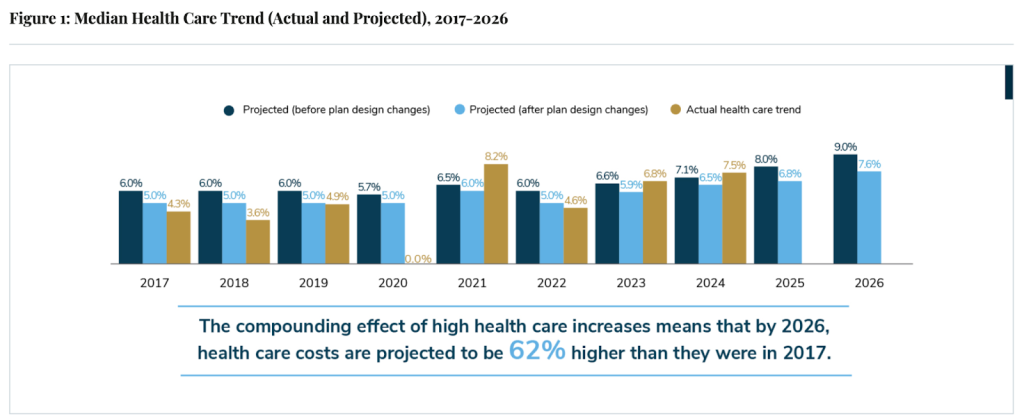
(Business Group on Health, “2026 Employer Health Care Strategy Survey”: Executive Summary; accessed September 2025)
Government Legislation
Legislation has also played a role in the expansion of wellness programs in recent decades. Between 2011 and 2015, the Affordable Care Act made over $200 million available to eligible businesses without existing wellness programs, prompting many to launch these initiatives for the first time.
Employee interest
Finally, wellness has taken on a bigger role in the national conversation. It’s more important than ever to Americans, especially millennials and Gen Z-ers, who make up the largest segment of the workforce. These age groups account for 36% of the U.S. adult population, but drive 41% of annual wellness spend. Wellness benefits can be an attractive perk to job seekers in these categories.
With both a greater emphasis on wellness and a financial need for it, it makes sense that more businesses are turning to strategic wellness programs in an effort to optimize spending and better engage their employees.
Do employee wellness programs really work? (5 Examples)
To get a solid understanding about whether employee wellness programs work, it’s most effective to look at actual examples of programs in action. Here are five real-world case studies that demonstrate the payoff employee wellness programs can have–and the diverse forms they can take for different organizations.
Reduced absenteeism costs
An Indianapolis-based medical billing and coding company took part in a healthy worksite program sponsored by the Centers for Disease Control and Prevention. Within the program, the company offered tailored interventions aimed at improving employee health and well-being, with initiatives like counseling, healthier on-site food choices, tobacco cessation assistance, and materials promoting physical activity.
Within the 20-month study period, sick days and their resulting expenses declined. Absenteeism costs for employees who participated in the program dropped from $144.03 to $84.95–a 41% reduction. Company wide, this amounted to more than $8,300 in savings.
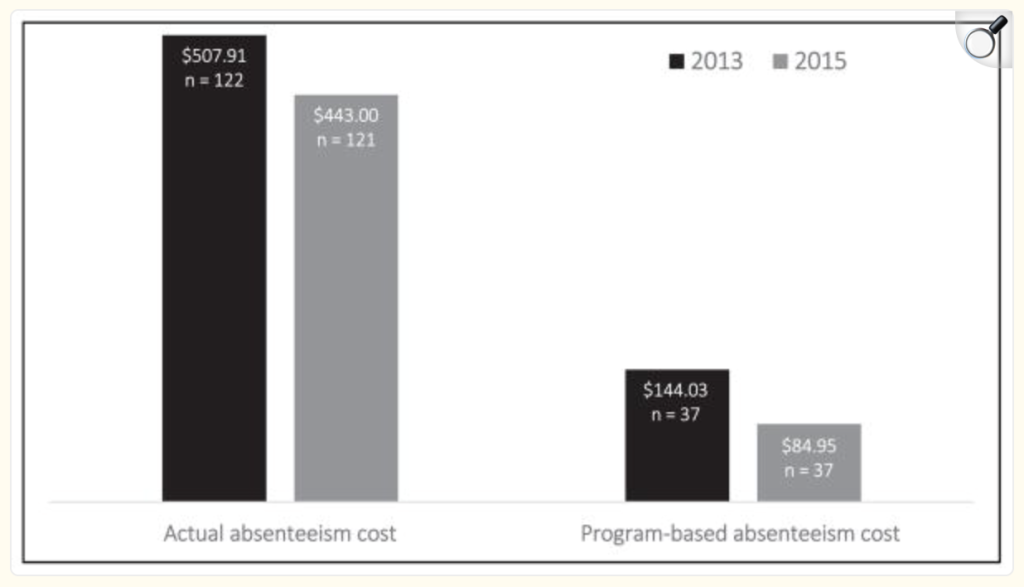
(CIPROMS Inc., “A Simple Method to Estimate the Impact of a Workplace Wellness Program on Absenteeism Cost,” 2013 and 2015 data, accessed September 2025.)
Lower turnover
IKEA Canada learned through an employee survey that workers craved more support for family obligations, personal illnesses, stress, and an overall healthy lifestyle. The homeware giant set out to respond to the need by expanding its mental health benefits.
It did so with a number of offerings;12 flexible wellness days per year, a free ‘Mental Health First Aid’ training course, and a digital program to help workers and their families focus on self-care, resilience, and mindfulness. In 2024, the retailer announced notable progress: turnover dropped from 35% to 24.5%.
Providing employees with the support they need to deal with challenges both inside and outside of work gives them a reason to stay with the company even when times get tough, which can help boost retention.
Stronger financial performance
The business impact of employee wellness can be tricky to quantify. It comprises many not-easily-measured factors, like productivity, effort, job satisfaction, and morale.
Yet, assigning a dollar value to employee wellness is exactly what researchers from the University of Oxford set out to do when they created the “Wellbeing 100.” It’s a hypothetical stock portfolio made up of 100 companies that have the highest ratings for employee well-being.
Their findings were stark: over the three-year time frame in which results were analyzed, the Wellbeing 100 outperformed every major stock index. A closer inspection of the results revealed that companies with higher well-being ratings consistently had higher valuations, profits, and returns than their counterparts who were less focused on wellness.
Investing in wellness pays off–not just in good vibes, but in actual revenue.
Improved mental health
Agricultural cooperative Land O’Lakes, Inc. began noticing a troubling trend: the same behavioral health conditions were showing up over and over again in employees’ medical and disability claims. To combat the frequent claims, they decided to step up mental health support for workers and their families.
The company’s approach was multifaceted, including a combination of onsite behavioral therapy, virtual therapy, on-demand access to meditation and mindfulness sessions, specialized support for underserved populations like LGBTQ+ employees and people of color, and more.
Employee response was overwhelmingly positive, with a 95% satisfaction rating. Eighty-two percent of people who sought care through the new program recovered or saw clinical improvement in their symptoms.
Supporting employee mental health helps workers show up as their most productive selves, which can lead to higher job satisfaction and improved team morale.
Reduced risk of chronic illness
Walworth County, Wisconsin began offering county employees free health risk assessments, or HRAs, that identify risk based on biometrics like weight, cholesterol, blood pressure, and blood glucose. In addition to receiving a handy printout they can share with their primary care doctor, employees who participate in the HRAs also receive a score that correlates with their risk for developing chronic health conditions.
Based on that score, employees have different options:
- Low scorers receive a discount on their health insurance.
- At-risk scorers can pay more, or participate in interventions to both lower their health risk and get them access to the full insurance discount.
Employees have responded well. One-hundred percent of people who chose to participate in the interventions completed their respective programs, resulting in reduced risk scores for metabolic syndrome, diabetes, and hypertension. The county also came out on top, saving an estimated $4.79 in healthcare costs for every $1 it invested in the program.
Small wellness steps, like biometrics screenings, today can have big impacts down the road by helping catch chronic disease early and enabling preventative lifestyle changes that reduce long-term healthcare costs.
Make employee wellness accessible with Agile Telehealth
Whatever form an employee wellness program takes, it’s most effective when employees can access it easily, affordably, and on their own terms. That’s where Agile Telehealth comes in.
We help companies provide low-cost telehealth wellness programs that support workers’ physical and mental well-being at little to no cost to your organization. Also, you don’t have to wait for your next enrollment period. Get your program up and running in as little as two weeks, with no complex technical setup required.
Ready to offer the wellness services and support your employees crave? Here’s a list of our program offerings:
- Weight Loss
- HRT/TRT
- Hair Loss
- Anti-Aging
- Mental Health
- Sexual Health
- Urgent Care
Learn more about our services and fill out a form to take the next step by speaking with one of our specialists.