Low testosterone is a readiness problem.
Treat it like one.
Falling PT scores and poor recovery get blamed on workload. Agile Telehealth tests for the cause — standardized labs, clinician review, a documented decision — without pulling anyone off station.
Loss of lean mass, longer recovery between hard training days, and declining performance on physical standards are among the most commonly reported symptoms of low testosterone. They’re also the symptoms most often attributed to training load or age.
Focus & mood
Concentration problems, irritability, and low motivation affect judgment and cohesion. When the cause is hormonal, coaching and counseling address the symptom without touching the driver.
Sleep & fatigue
Persistent fatigue and disrupted sleep are treated as schedule problems. A hormone panel is one of the few ways to tell whether something correctable is underneath.
One panel, built to answer your questions
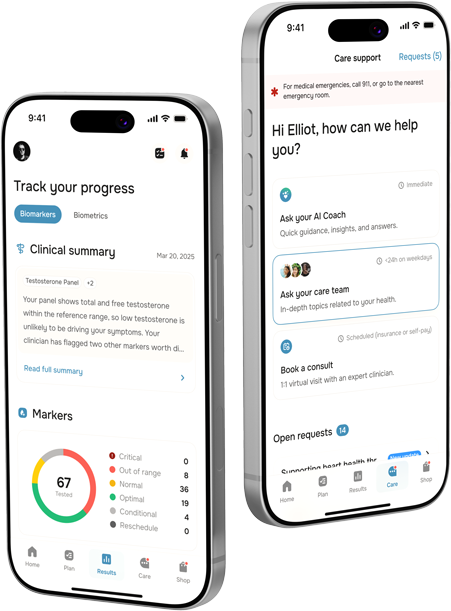
65+ markers, selected to confirm or exclude testosterone deficiency and to identify the conditions that present the same way. When the answer is no, the member gets a documented no — not another referral.
A short clinical intake captures symptoms, history, and current medications — completed on the member’s own time, with no appointment to book. Members who don’t meet screening criteria find out here, before any lab spend.
Step 2
Meet with a licensed clinician
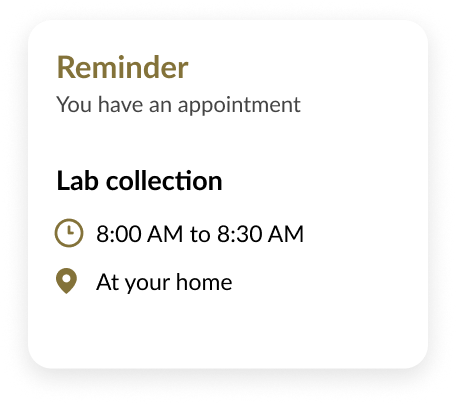
One morning collection window
Testosterone has to be drawn early, so collection is fixed to a single specified window via the at-home test kit sent to each patient. Same window for every member, which is what makes cohort results comparable.
Step 3
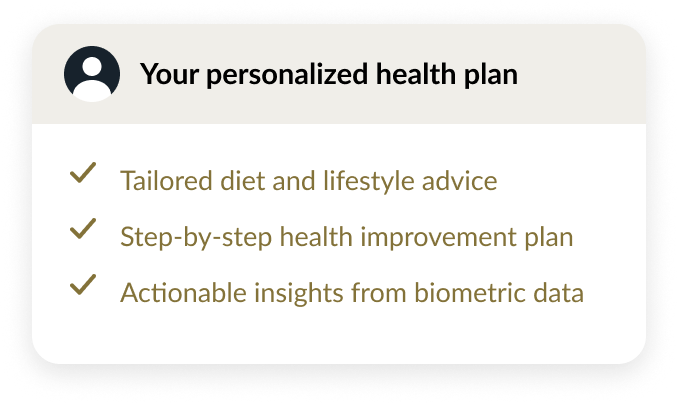
Begin your personalized plan
No follow-up appointment to chase
Every panel is read against a defined protocol by a clinician licensed in the member’s state — not scored by an algorithm. The clinician confirms, excludes, or orders confirmatory testing, and the result comes back to the member either way.
Step 4
Get ready— then stay ready
A documented decision, either way
Where criteria are met and therapy is clinically appropriate, a licensed clinician prescribes and sets a monitoring schedule — where criteria aren’t met, the member gets a documented negative result and a referral path. No one exits without a plan of action.
Scoped, priced, and measurable
Defined screening panel
65+ markers per member, identical across the cohort. Standardizing the panel is what makes cohort-level results comparable and what lets a pilot produce usable data.
Protocol-driven decisions
Providers trained on 100+ clinically-vetted protocols, so every member is evaluated against the same standard regardless of who reviews the panel.
Every result read by a clinician licensed in the member’s state. Multi-state coverage means the pathway operates the same way at every installation.
Aggregate program reporting
De-identified cohort reporting to the program office: screening completion, time to documented decision, confirmatory testing rate. Individual results go to the member and their clinician.
Start with one cohort. Scope the pilot.
Tell us the population, the sites, and the timeline. You’ll get a scoped pilot: the defined panel, the full clinical protocol, the screening schedule, and aggregate reporting built for your program office.